Fixing a Roof Rack can be a technical matter when there are so many different makes and models of vehicles on the market.
What different types of roof rack are there? -Information Required to Fit a Thule Roof Rack
To ensure we supply and fit the correct Thule roof rack for your vehicle, we will need the following details:
-
Vehicle make and model
-
Year of registration
-
Number of doors
-
Vehicle type (estate, saloon, MPV, etc.)
-
Does the vehicle have roof rails?
Providing accurate information allows us to guarantee a safe, secure, and correct fit.
What Can Be Carried on Thule Roof Bars?
Once a Thule roof rack is fitted to your vehicle, you can attach:
-
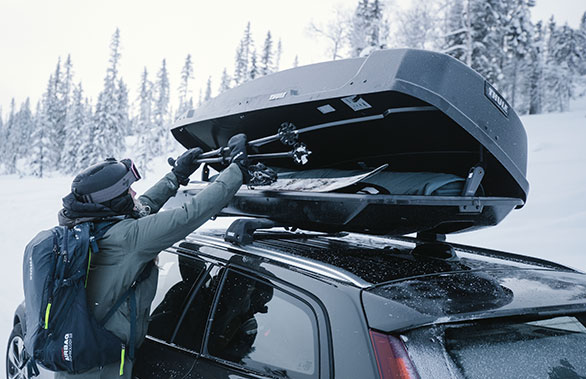
Ski and snowboard carriers
This gives you maximum flexibility for holidays, outdoor activities, and everyday travel.
Roof Types Compatible with Thule Roof Racks
There are five main roof types that a Thule roof rack can be fitted to.
⚠️ Please note: Unfortunately, roof racks cannot be fitted to convertible vehicles.
If you’re unsure which roof type your vehicle has, our team will be happy to help identify it for you.
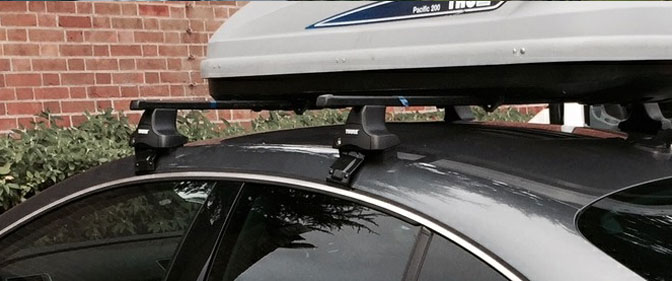
1. Flat Roof
For vehicles with a flat roof, the Thule roof rack is fitted using rubber pads that sit directly on the roof surface. The rack is secured using plastic-coated metal fixing plates that fit around each door frame, ensuring a strong and stable installation.
Once positioned correctly, the rack is tightened to create a secure, safe fit. All Thule roof racks are lockable and supplied with a key for added security throughout the hire period.
For some 3-door vehicles, a Thule short roof adapter may be required to ensure the correct fit.
Important Note
If a Thule roof rack is fitted to your vehicle for several days and you travel to a warmer climate, a light imprint from the rubber pads may appear on the roof once the rack is removed. This is normal and can be easily removed by cleaning the roof after use.
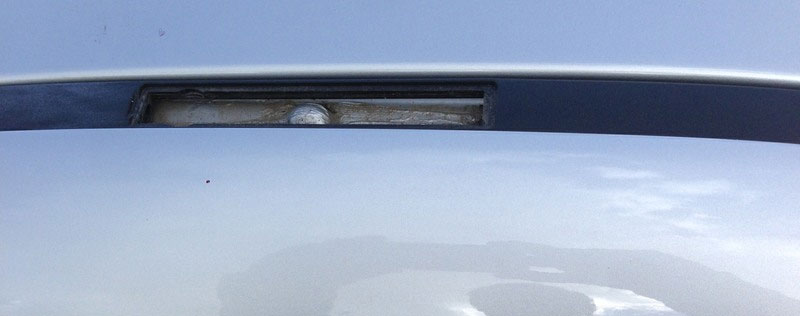
2. Fixed Points in the Roof
Some vehicles are manufactured with fixed mounting points built into the roof. These fixed points may be visible or hidden beneath a small flap or plastic cover, which can be easily removed to access the mounting area.
The Thule roof rack is securely attached to the roof using bolts or screws that fasten directly into these fixed points, providing a very strong and reliable connection.
On certain vehicles, it may be necessary to trim or remove a small amount of excess material from the insert to allow proper access to the fixing holes. This is a normal part of the fitting process.
Once installed, lockable covers are fitted over the foot plates to protect the fixings and provide added security.
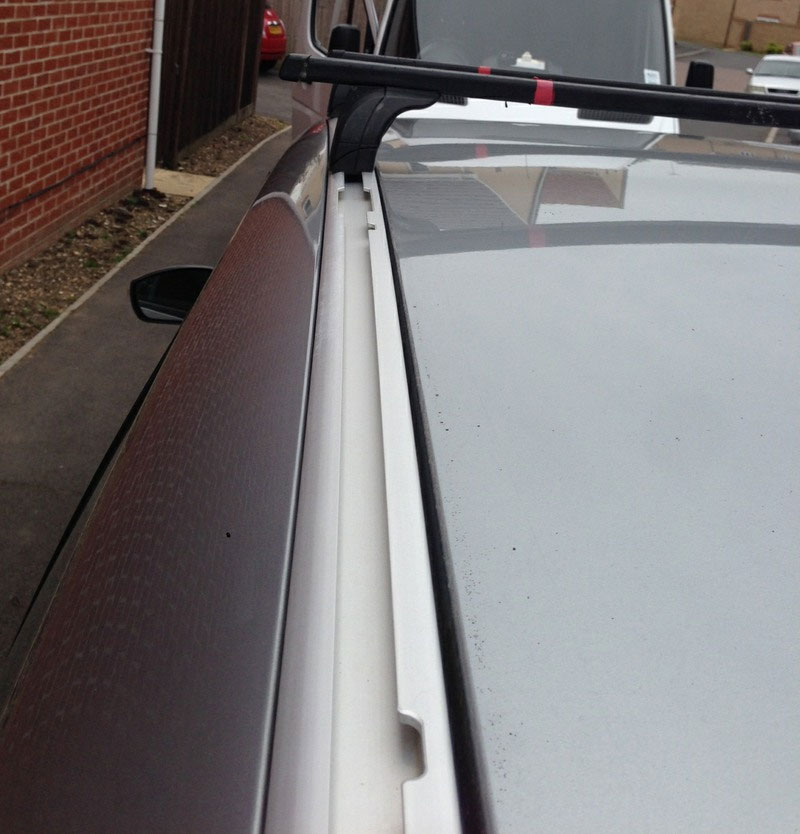
3. Tracking System in the Roof
Some vehicles are fitted with a tracking system (also known as a roof channel) that runs along the edge of the roof.
A mounting plate attached to the Thule roof rack is inserted into this channel and then tightened to create a secure and stable fixing point for the rack.
Once installed, lockable covers are fitted over the foot plate fixings to protect the fittings and provide added security.
4. Roof Rails – Solid Integrated Bars
Some vehicles are fitted with solid integrated roof rails that are built directly into the roof design. These rails sit close to the roof and run from front to back.
The Thule roof rack is designed to slot securely over the integrated bars, creating a strong and stable fixing point without the need for additional modifications.
Once fitted, lockable covers are placed over the foot plate fixings to protect the fittings and provide extra security during use.
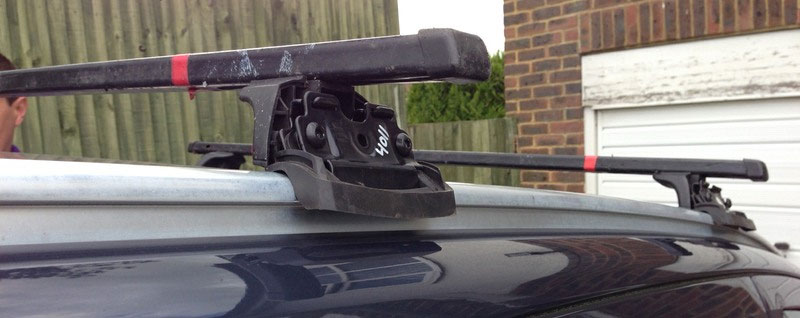
5. Roof Rails with a Gap Between the Roof and the Rail
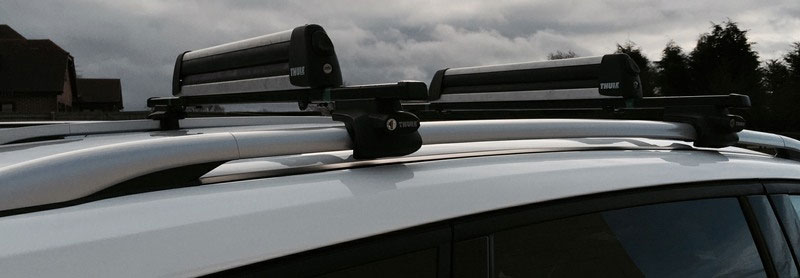
Some vehicles are fitted with raised roof rails, where there is a clear gap between the roof and the rail — often large enough to fit your hand through.
The Thule roof rack fits securely over these raised rails and is tightened to clamp firmly in place, ensuring a safe and stable installation.
Once fitted, the Thule roof rack is fully lockable, with a key supplied for the duration of the hire to provide added security.

⚠️ IMPORTANT – Weight & Length Restrictions
Please be aware that strict weight limits apply to all roof racks and roof boxes. On some vehicles, it may not be possible to fit both a roof rack and a roof box due to manufacturer weight restrictions.
Your hire contract will clearly state the maximum permitted roof load for your vehicle, and this must not be exceeded at any time.
Typical Roof Load Limits
Most vehicles have a maximum roof load of 75–100kg, which includes:
-
The Thule roof rack (approximately 7kg)
-
The Thule roof box (approximately 12–26kg, depending on size)
-
The contents inside the roof box
Because of this, the available carrying capacity inside the roof box can be significantly reduced.
Roof Box Weight Examples
-
460-litre roof box: Typically carries up to 50kg
-
650-litre roof box: Typically carries up to 75kg
These figures are subject to your vehicle’s maximum roof load, so please also check your vehicle handbook for manufacturer guidelines.
Carrying Large or Long Items
If you plan to carry large or long items such as mattresses or fencing panels on your roof rack, reduced speed limits may apply.
Please speak to a member of our team for guidance before travelling with oversized loads.